Your Child’s First Dental Exam in Falmouth, ME
What Dr. Willis checks, what to expect, and why the first visit matters
At Falmouth Pediatric Dentistry, that first visit is designed to be short, gentle, and useful for parents. Dr. John M. Willis, DDS, checks your child’s teeth and mouth, looks for early signs of cavities or development concerns, and shows you how to care for their smile at home.
What happens at your child’s first dental exam?
Reviewed by Dr. John M. Willis, DDS, board-certified pediatric dentist. Last reviewed September 2026.
The first exam is usually quick. For babies and toddlers, much of the appointment is spent talking with you about what Dr. Willis sees and what you can expect as your child grows.
Dr. Willis may check:
- Which baby teeth have come in, and how they’re developing
- Your child’s gums, tongue, lips, and cheeks
- Early signs of tooth decay, including white spots that can appear before a cavity forms
- How the upper and lower teeth and jaws come together
- Early bite concerns, such as a crossbite
- Thumb-sucking, pacifier use, and other oral habits
- Bottle feeding, breastfeeding, snacks, and drinks
- Brushing habits and fluoride use
- Your child’s individual risk for cavities
X-rays aren’t automatic at a first dental visit. Dr. Willis recommends dental x-rays based on your child’s individual needs, symptoms, cavity risk, and what he can see during the exam.
What if my toddler cries at the dentist?
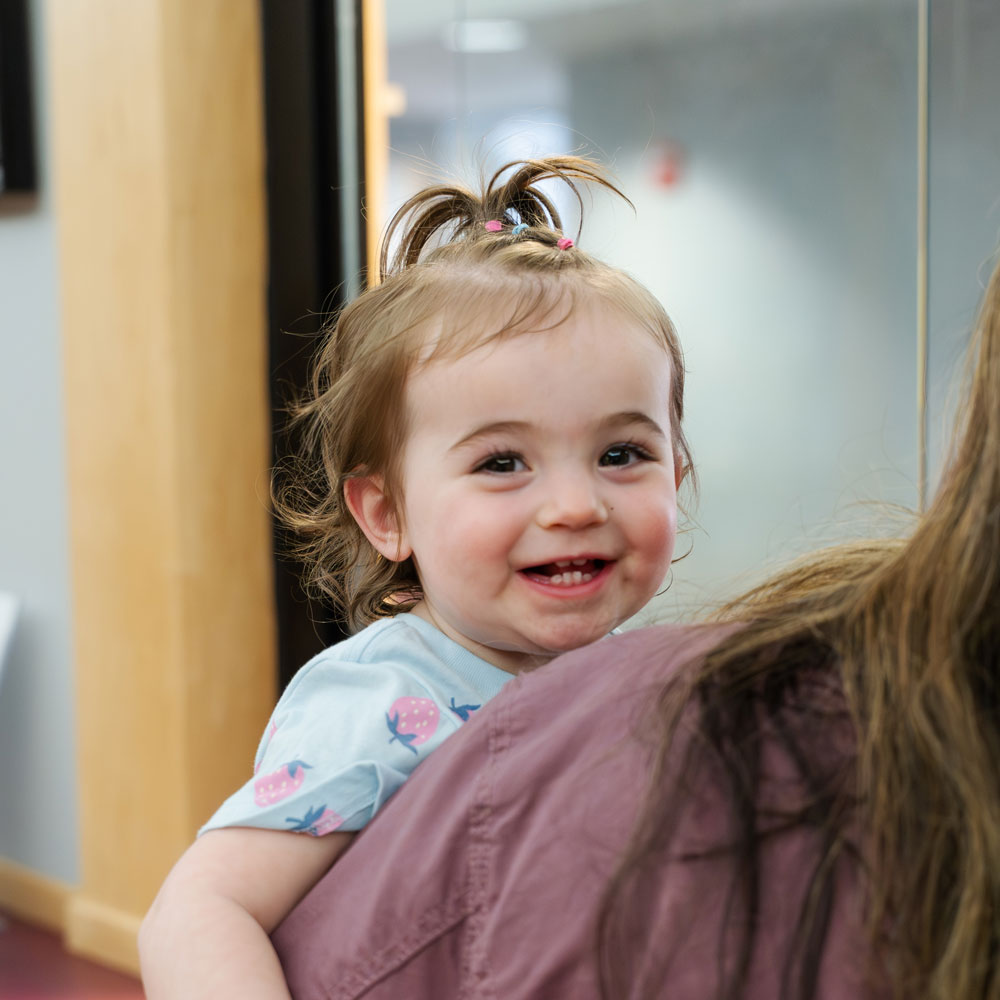
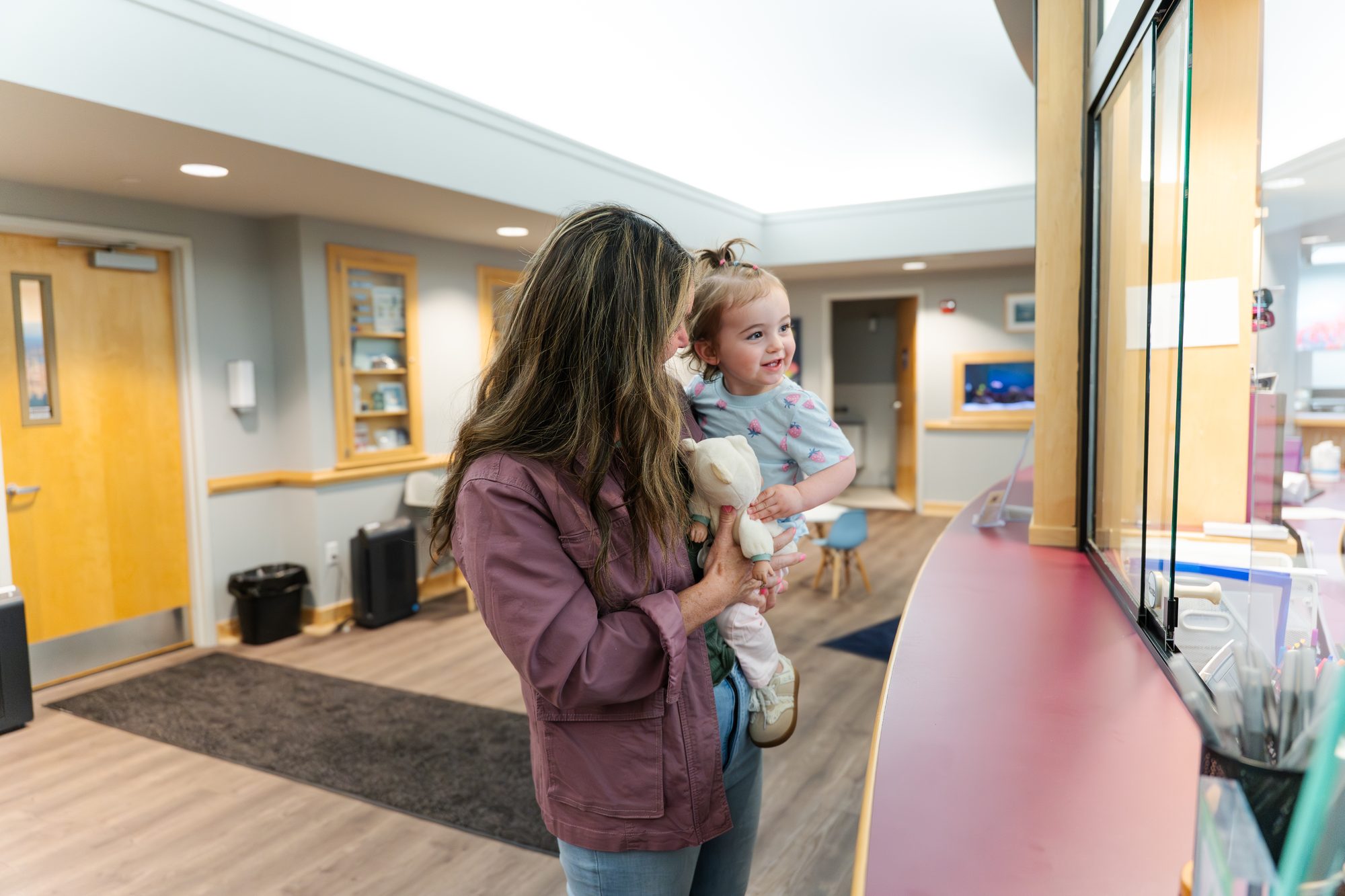
That’s completely common at this age. Nobody expects a 1-year-old or 2-year-old to sit perfectly still and open wide on command. Your child’s first dental appointment is also an introduction to the office, the team, and the experience of going to the dentist. We go at your child’s pace.
Your child may:
- Sit on your lap during the exam
- Need a break before we continue
- Feel unsure about unfamiliar instruments
- Spend a little time watching Goldie in the fish tank
For a young child, a successful first visit doesn’t mean perfect cooperation. It means we were able to learn something about their oral health while helping the dental office become a more familiar place.
What will parents learn at the first visit?
You’ll leave with practical guidance for the next stage of your child’s dental development. Depending on your child’s age and needs, Dr. Willis may talk with you about:
- How to brush baby teeth
- How much fluoride toothpaste to use
- Bedtime bottles or nighttime nursing and cavity risk
- Teething and when new teeth may appear
- Pacifier and thumb-sucking habits
- Tooth-friendly snacks and drinks
- What to do if your child chips or injures a baby tooth
- When your child should return for their next dental checkup
For children under age 3, current dental guidance generally recommends using a smear of fluoride toothpaste about the size of a grain of rice. And you’ll have time to ask questions. Dr. Willis explains what he sees and what it means instead of simply sending you home with a pamphlet. Your child gets a goody bag, too.
How to prepare your child for their first dentist appointment
You don’t need to do much. Keeping the visit simple can make it feel less intimidating.
Before the appointment:
- Schedule the visit for a time when your child is usually rested and fed.
- Keep your explanation short and positive.
- Try saying, “The dentist is going to count your teeth.”
- Avoid words such as “shot,” “hurt,” or “drill,” even when saying those things won’t happen.
- Bring your insurance information and an updated list of medications or health conditions.
- Bring a comfort item if your child has one.
If watching an older sibling visit the dentist helps your child feel more comfortable, ask our team whether scheduling their visits together makes sense.
Why does my child need a dentist at age 1?
Seeing a pediatric dentist early gives you a chance to prevent problems rather than waiting until something hurts. Even a child with only a few teeth can develop cavities.
An early visit also gives Dr. Willis an opportunity to:
- Identify early signs of tooth decay
- Review brushing and fluoride use
- Talk about feeding and snacking habits
- Monitor how teeth and jaws are developing
- Discuss pacifier or thumb habits
- Establish a dental home before an urgent problem happens
Baby teeth help children chew, speak, and maintain space for the permanent teeth developing underneath them. Keeping them healthy can support your child’s comfort and oral development until those teeth are naturally ready to fall out.
Starting care early also creates a baseline Dr. Willis can follow as your child grows. Over the years, care may include regular exams and cleanings, fluoride treatment, dental sealants, and evaluation of your child’s developing bite.
Do babies need dental X-rays?
Not necessarily. A first dental visit doesn’t automatically include x-rays. Dr. Willis recommends x-rays only when they provide information that can’t be gathered through a visual exam alone. Your child’s age, symptoms, dental development, cavity history, and individual risk all play a role in that decision.
l is to create an environment where your child feels supported while the dental team can safely complete the care they need.
Insurance and payment for your child’s first dental visit
Many dental insurance plans include coverage for routine pediatric dental exams, but benefits vary by plan. Our team can help you understand your coverage before your child’s visit.
Falmouth Pediatric Dentistry:
- Is in-network with Delta Dental
- Works with other dental insurance carriers
- Accepts MaineCare
- Accepts cash and checks
- Accepts most major credit cards
- Offers CareCredit
Have questions about your specific plan? Call our team before your appointment and we’ll help you understand what information is available.
Parents are sharing
the good news
 200+ 5-Star Reviews
“

“We brought our 10-month-old daughter in for her first cleaning and had a great experience. Everyone, from reception to Dr. John, was patient and gentle and made her first dental visit a positive one.”
– Lindsay C.
“
“It was my daughter’s first appointment, and she was very nervous. Everyone was patient, kind, and welcoming from the moment we checked in. She felt comfortable, and it made the whole experience so much easier.”
– Robert C.
“
“My daughter wouldn’t even sit in a dental chair before her first visit here. The team was amazing with her, and now she can’t wait to go back. I’m so grateful they helped ease her fear.”
– Jenniffer R.
Questions parents ask about a child’s first dental exam
When should my child see a dentist for the first time?
Schedule your child’s first dental visit when their first tooth appears or by their first birthday, whichever happens first. Early dental visits help identify cavity risk, establish healthy habits, and give parents guidance before dental problems develop.
What if my child cries or won’t open their mouth?
That’s common, especially for babies and toddlers. Dr. Willis can often complete the important parts of a first exam while your child sits on your lap. We keep the visit flexible and focus on what your child can comfortably manage that day.
Can I stay with my child during the dental exam?
Yes. Parents are an important part of early dental visits. For babies and young children, you can stay close, help your child feel secure, and hear Dr. Willis’s recommendations firsthand.
What should I tell my toddler before their first dentist appointment?
Keep it simple. You might say: “The dentist is going to count your teeth and show you a special toothbrush.” Avoid giving your child too many details or introducing words associated with pain or dental procedures.
Will my 1-year-old get their teeth cleaned?
It depends on your child’s age, cooperation, and individual needs. The most important goals of an early visit are examining your child’s mouth, identifying cavity risk, helping your child become familiar with the dental office, and giving you practical guidance for home care.
Will my child need X-rays at their first dental appointment?
Usually not unless there’s a clinical reason for them. Dr. Willis recommends X-rays based on your child’s individual oral health and development rather than automatically taking them at a certain age.
My child is 4 and has never been to a dentist. Is it too late?
No. If your child hasn’t had their first dental visit yet, schedule one now. Dr. Willis will examine their teeth and gums, assess their cavity risk and dental development, and recommend a preventive care schedule based on what he finds.
How often should my child visit the dentist?
Many children benefit from dental checkups about every 6 months, but the right schedule depends on your child’s oral health and cavity risk. Dr. Willis will recommend how often your child should return after their first exam.
First tooth, first visit, first step toward a healthy smile
Whether your baby just got their first tooth or your older child is finally ready for a first dental visit, we’ll make the experience simple, reassuring, and age-appropriate from the start.
receives.
Right here
in Falmouth
Our office is conveniently located in Falmouth, making it easy for local families to visit for pediatric dental and orthodontic care.
VISIT US
6 Fundy Rd. Ste. #200
Falmouth, ME 04105
Monday-Wednesday: 7:30am-4:00pm
Thursday: 7:30am-3:00pm