Pediatric Sedation Dentistry in Falmouth, ME
Gentle, comfort-focused care for anxious and nervous children
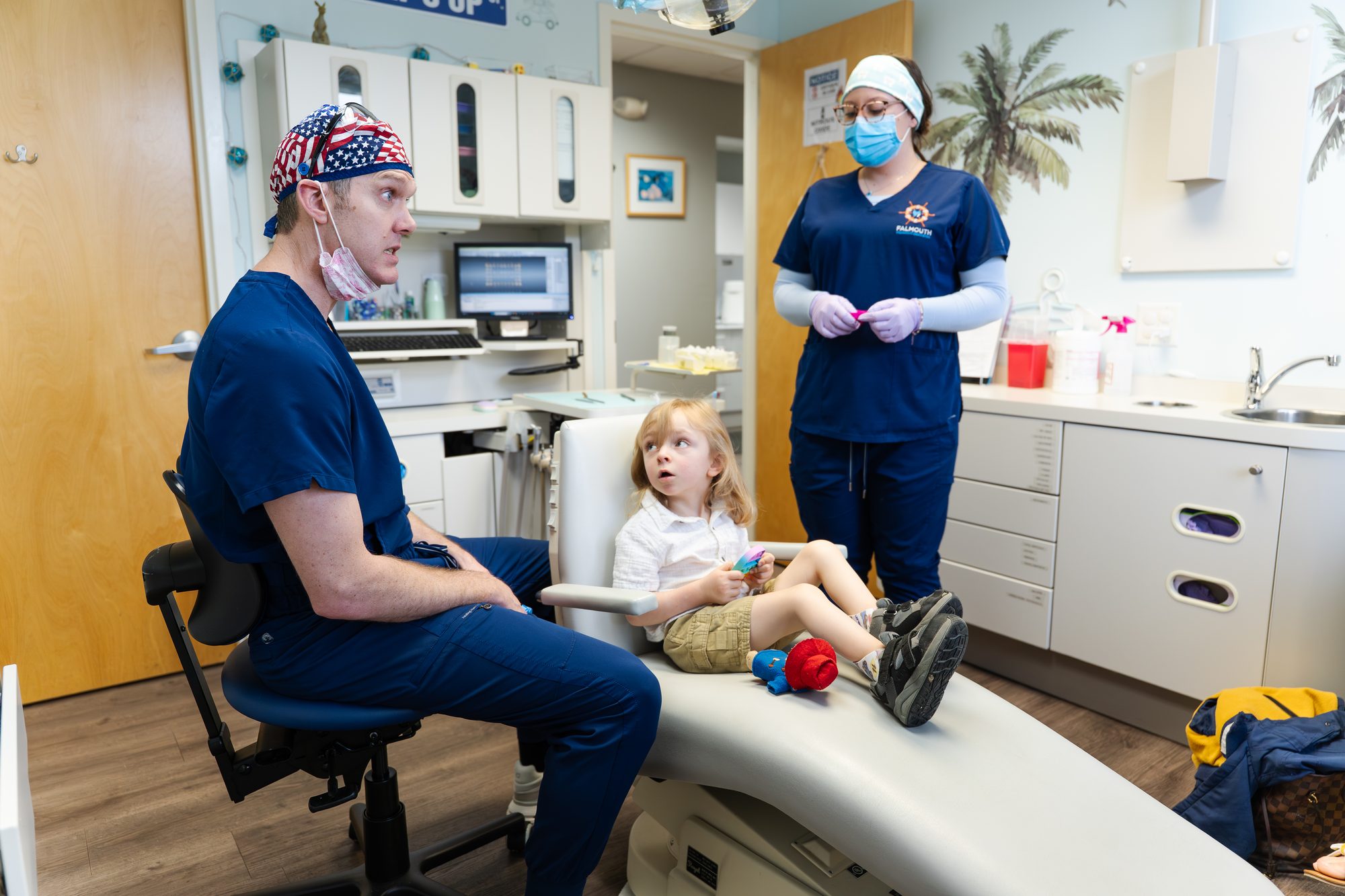
At Falmouth Pediatric Dentistry, Dr. John M. Willis, DDS, starts by understanding your child, their past experiences, and what helps them feel comfortable. For some children, that means a slower visit and clear explanations. For others, additional support may be appropriate.
How we help anxious children feel more comfortable
Reviewed by Dr. John M. Willis, DDS, board-certified pediatric dentist. Last reviewed September 2026.
Every child responds to dental care differently. Some children need only a little extra time. Others feel more comfortable after a few visits with the same dentist and team.
Our comfort-focused approach may include:
- Explaining what will happen before we begin
- Using simple, age-appropriate language
- Giving your child time to become familiar with the room
- Moving at a pace that matches their comfort level
- Letting parents stay close when appropriate
- Taking breaks when needed
- Adjusting our approach based on how your child responds
For many children, familiarity and predictability can make future visits easier.
When might a child need sedation dentistry?
Sedation may be considered when a child needs more support than a comfort-focused visit alone can provide.
That may include children who:
- Have significant dental anxiety
- Have had a difficult dental experience in the past
- Are very young and need treatment they can’t comfortably sit through
- Need a longer or more involved procedure
- Have difficulty tolerating dental treatment
- Have individual medical, developmental, or behavioral needs that affect care
Sedation isn’t automatically recommended because a child feels nervous. Dr. Willis considers the treatment your child needs, their health history, previous dental experiences, and how they respond during the visit before discussing next steps.
How does Dr. Willis decide whether sedation is appropriate?
There isn’t one sedation plan that works for every child. The decision starts with an evaluation.
Dr. Willis may consider:
- Your child’s age
- Medical history
- Dental treatment needs
- Level of anxiety
- Previous dental experiences
- Ability to comfortably complete treatment
- How long the procedure may take
If additional support is appropriate, Dr. Willis will explain the recommended approach, why he recommends it, and what you should expect. You’ll have time to ask questions before making a decision.
What sedation options are available for children?
The appropriate sedation approach depends on your child and the treatment being planned. Rather than presenting sedation as a one-size-fits-all menu, Dr. Willis discusses the options that are clinically appropriate for your child during the treatment-planning process.
Before proceeding, our team will explain:
- Why sedation is being considered
- What type of support is recommended
- What your child may experience
- How to prepare for the appointment
- What to expect afterward
- Any instructions you’ll need to follow
What if my child is simply scared of the dentist?
Being afraid of the dentist doesn’t automatically mean your child needs sedation. For many children, the first step is helping the dental office feel more familiar. That may mean a shorter appointment, extra explanation, or simply giving your child time to build trust with Dr. Willis and the team.
If your child has had a difficult dental experience somewhere else, tell us before the visit. That information helps us plan an approach that takes their previous experience into account.
Can parents stay with their child?
For many pediatric visits, parents can stay close and be part of the experience. Dr. Willis and the team will let you know what makes sense for your child and the type of treatment being provided.
The goal is to create an environment where your child feels supported while the dental team can safely complete the care they need.
Sedation and restorative dental care
Sedation may sometimes be discussed when a child needs restorative treatment that would otherwise be difficult to complete comfortably.
If Dr. Willis finds a cavity or another dental problem, he’ll first explain:
- What treatment is needed
- Whether treatment can be completed without sedation
- Whether a minimally invasive option may be appropriate
- What comfort or sedation support may help
- What the next appointment will involve
Parents are sharing
the good news
 200+ 5-Star Reviews
“

“Our kiddo is extremely fearful of needles and dental work, but Dr. Willis has such a calm, reassuring presence that she was able to relax and get through the procedure with ease.”
– Misty H.
“
“My 4-year-old gets very nervous at appointments, but the entire staff made her feel safe and comfortable. They were patient, gentle, and let her sit on her dad’s lap. By the end, she was smiling.”
– Kassie T.
“
“My daughter has autism and went in crying because she was afraid, but she came out happy and smiling. The doctor handled the situation exceptionally well.”
– Zuleyka D.
Questions parents ask about pediatric sedation dentistry
Does Falmouth Pediatric Dentistry offer sedation for anxious children?
Sedation may be available for children who need additional support to complete dental care comfortably. Dr. Willis evaluates each child individually and discusses appropriate options with parents before treatment.
Does my child need sedation if they’re afraid of the dentist?
Not necessarily. Many children do well with a slower pace, clear explanations, familiar faces, and time to become comfortable with the dental office. Sedation may be discussed if anxiety or another factor makes it difficult for your child to safely complete needed treatment.
Is pediatric dental sedation safe?
Sedation safety depends on choosing the appropriate approach for the child, reviewing their medical history, following established clinical guidelines, and providing appropriate monitoring.
Dr. Willis will discuss the benefits, risks, preparation instructions, and alternatives with you before sedation is used.
What should I tell the dentist about my child before sedation?
Tell the dental team about your child’s:
- Medical conditions
- Medications
- Allergies
- Previous reactions to sedation or anesthesia
- Past dental experiences
- Anxiety or sensory concerns
You’ll receive additional instructions if sedation is planned.
Can my child eat before a sedation appointment?
It depends on the type of sedation being used. If your child is scheduled for sedation, our team will give you specific eating and drinking instructions beforehand. Follow those instructions carefully.
What if my child had a bad dental experience somewhere else?
Let us know when you schedule. Understanding what happened and what your child found difficult can help Dr. Willis and the team plan a calmer first visit and avoid unnecessary surprises.
When should my child first see a pediatric dentist?
Children should generally have their first dental visit when the first tooth appears or by age 1. Starting early gives your child time to become familiar with the dental office before more complicated treatment is ever needed.
Schedule a comfort-focused pediatric dental visit in Falmouth, ME
Dr. Willis can meet your child, understand what they need, and talk with you about the safest and most appropriate approach for their care.
Right here
in Falmouth
Our office is conveniently located in Falmouth, making it easy for local families to visit for pediatric dental and orthodontic care.
VISIT US
6 Fundy Rd. Ste. #200
Falmouth, ME 04105
Monday-Wednesday: 7:30am-4:00pm
Thursday: 7:30am-3:00pm